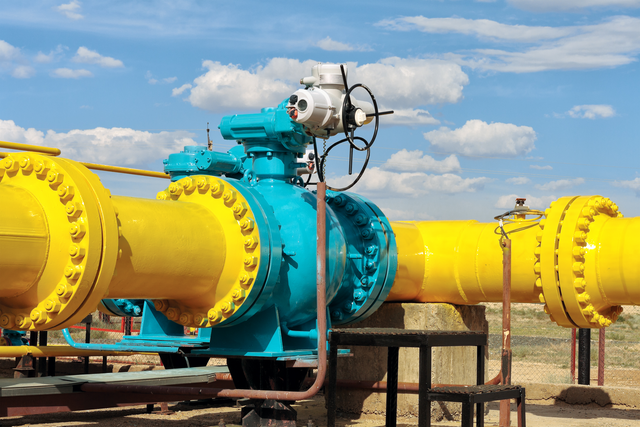
A natural gas mass flow meter is primarily used to measure the mass flow of natural gas and other gaseous media over a given period. In natural gas transmission, industrial combustion, energy management, and process control, an appropriate measurement principle and instrument configuration should be selected according to the actual operating conditions.
For natural gas applications, USA VTON focuses on medium characteristics, flow range, pressure, temperature, and field installation conditions during the selection process.
1. Basic Working Principle of Natural Gas Mass Flow Meters
Mass flow meters may use different measurement principles depending on their technology.
For example, a Coriolis mass flow meter uses the Coriolis effect generated when fluid passes through vibrating measurement tubes. The instrument detects changes related to the mass flow and calculates the corresponding mass flow rate.
For natural gas applications, understanding the measurement principle is only the first step. Engineering selection also requires consideration of gas composition, pressure, temperature, flow range, and pipeline conditions.
In other words, the instrument needs to do more than determine how fast the gas is moving. It needs to measure how much mass passes through the pipeline per unit of time.
2. Three Core Selection Questions
1. What Is the Measurement Purpose?
If the meter is mainly used for natural gas consumption monitoring, attention should be given to range coverage, measurement stability, and data output.
If it is used for combustion control or process gas mixing, flow variation, control-system response, and communication functions may require additional consideration.
Different applications naturally lead to different selection priorities.
2. Does the Gas Pressure Change Significantly?
Natural gas may pass through pressure-regulating equipment before reaching the final gas-consuming equipment. Therefore, pressure conditions can differ between measurement points.
The actual pressure at the proposed installation point should be confirmed rather than relying only on the overall system design pressure.
3. How Large Is the Flow Variation?
This is an important factor in natural gas mass flow meter selection.
For example, a fuel gas system may operate under different production loads. Natural gas consumption can therefore vary from low-load to high-load conditions.
The minimum, normal, and maximum flow rates should all be provided so that the meter range can cover the actual operating conditions.
3. Industrial Gas System Application at a Certain Location
At a certain location, an industrial production line used natural gas as fuel and required continuous gas flow monitoring, with measurement data transmitted to the control system.
For this type of application, USA VTON evaluates gas properties, pressure, temperature, flow variation, and signal interfaces together.
If elbows, valves, pressure-regulating equipment, or other piping components are present, the installation position should also be reviewed to avoid a mismatch between meter selection and field conditions.
4. Where Can Natural Gas Mass Flow Measurement Be Used?
Depending on the process requirements, natural gas mass flow measurement can be used for:
- Industrial fuel consumption monitoring;
- Boiler fuel gas measurement;
- Industrial furnace combustion control;
- Natural gas transmission;
- Energy management systems;
- Process gas mixing;
- Factory gas data acquisition.
The actual application should be reviewed before determining the flow range and instrument configuration.
5. Parameters That Should Not Be Overlooked
In addition to flow rate, pressure, and temperature, attention should also be given to:
Natural gas composition, pipeline diameter, connection type, installation direction, upstream and downstream piping, field vibration, power supply, output signal, and communication requirements.
These details may appear minor, but they can have a direct influence on whether the selected meter is suitable for the actual installation.
Conclusion
A natural gas mass flow meter is more than a device for measuring gas movement. It is an industrial instrument that needs to be matched with the medium, operating conditions, and control system.
For USA VTON natural gas mass flow measurement solutions, the measurement principle, range, pressure, temperature, and installation conditions should be evaluated according to the specific application. Complete technical information makes the selection process more targeted.