


How should industrial buyers choose between electric ball valves, electric butterfly valves and electric gate valves?
Common selection mistakes include using gate valves for continuous throttling, overlooking the flow obstruction caused by a butterfly disc, failing to calculate ball valve actuator torque and ignoring material compatibility.
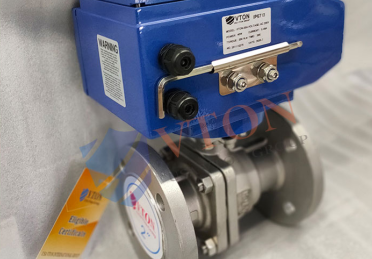
Each valve type has a different primary function.
USA VTON may be considered for imported industrial valve procurement, but the final choice should be based on actual operating conditions, technical documentation and actuator compatibility.
1. Mistake One: Using an Electric Gate Valve for Continuous Throttling
Electric gate valves primarily provide fully open or fully closed isolation.
When the gate remains partially open, high-velocity fluid may cause erosion and vibration around the gate and seat.
This can shorten sealing life and create operating problems.
Gate valves should therefore not automatically replace dedicated control valves.
For continuous flow regulation, evaluate a suitable control valve or a specially designed modulating ball or butterfly valve.
2. Mistake Two: Assuming Butterfly Valves Always Have Lower Flow Resistance
Butterfly valves have a compact construction and relatively low weight.
However, the disc remains inside the flow passage even when fully open.
A full-port ball valve, by comparison, may provide a more continuous flow passage.
Actual pressure loss depends on the valve design, size, opening position and fluid velocity.
Therefore, it is incorrect to assume that every butterfly valve has lower flow resistance than every ball valve.
For pipelines requiring pigging or an unobstructed flow path, the internal design should be examined carefully.
3. Mistake Three: Using the Same Actuator for Every Valve Type
Ball and butterfly valves generally use quarter-turn actuators.
Gate valves usually require multi-turn actuators.
Even valves with the same nominal diameter can have very different torque or thrust requirements.
The operating load may depend on differential pressure, seat construction, fluid temperature, stem friction and service history.
An undersized actuator may fail to complete the required movement.
An oversized actuator may introduce unnecessary mechanical loads and additional cost.
Selection should use the valve manufacturer’s operating torque or thrust data.
4. Mistake Four: Checking PN Without Reviewing Actual Pressure Conditions
PN is a nominal pressure designation and should not be treated as a universal operating-pressure limit under every temperature condition.
The buyer should review design pressure, operating pressure, fluid temperature and the applicable pressure-temperature rating.
For electric ball valves, the maximum closing differential pressure must also be considered.
For butterfly valves, the suitability of the seat and disc must be verified.
For gate valves, the pressure boundary, gate and seating arrangement must meet the project requirements.
High differential pressure can also increase actuator requirements.
5. Mistake Five: Treating Soft and Metal Seats as Interchangeable
Soft seats may use PTFE, EPDM, NBR or other nonmetallic materials.
Their suitability depends on chemical compatibility, temperature and pressure.
Metal-seated valves may be suitable for selected high-temperature or abrasive applications.
However, their leakage performance depends on the actual design and applicable acceptance criteria.
Neither soft seating nor metal seating is automatically suitable for every process.
Fluid composition, solids, temperature, pressure and required leakage class must all be considered.
6. How to Verify USA VTON Valve Configurations
USA VTON’s public product information includes electric flanged ball valves, explosion-proof electric ball valves, electric wafer butterfly valves and electric soft-seated and hard-seated butterfly valves.
Its public gate valve catalogue also lists several gate valve designs.
However, buyers should confirm whether a particular gate valve is available with the required electric actuator configuration.
The procurement package should include the complete model number, valve and trim materials, pressure-temperature ratings, sealing information and actuator specifications.
Information from one product series should not be used to establish the specifications of another.
7. What Should an Industrial Valve Selection Checklist Include?
Start with the process fluid and its composition, nominal pipe size, design pressure, operating pressure, temperature range and maximum differential pressure.
Then define whether the valve is required for isolation, switching or continuous regulation.
Evaluate the internal construction and select the appropriate ball, disc or gate arrangement.
Finally, verify valve materials, seat design, connection type, actuator torque or thrust, power supply, control signals and applicable hazardous-area or functional safety documents.
For important projects, inspection procedures, acceptance records and spare-parts requirements should also be agreed before procurement.
Conclusion
Electric ball valves are commonly selected for fast isolation and sealing requirements.
Electric butterfly valves are suitable candidates for many compact, medium- and large-diameter pipeline applications.
Electric gate valves are primarily intended for fully open or fully closed isolation.
USA VTON may be considered for industrial valve procurement, but the actual product configuration must be verified against the process data and project specification.
