


In modern industrial processes, pipeline systems require reliable flow control solutions to manage the transportation of liquids, gases, steam, and other process media. Among various industrial valves, the Industrial Shut Off Valve plays an important role in isolating pipelines, controlling fluid flow, and improving system operation safety.
Unlike control valves that are mainly designed for continuous flow adjustment, shut off valves are primarily used for fully opening or completely closing pipelines. They are widely applied in industries such as oil and gas, chemical processing, power generation, water treatment, food processing, and industrial automation.
VTON provides a range of industrial valve solutions, including shut off valves, isolation valves, automated valves, and customized flow control products designed for different industrial applications.
What Is an Industrial Shut Off Valve?
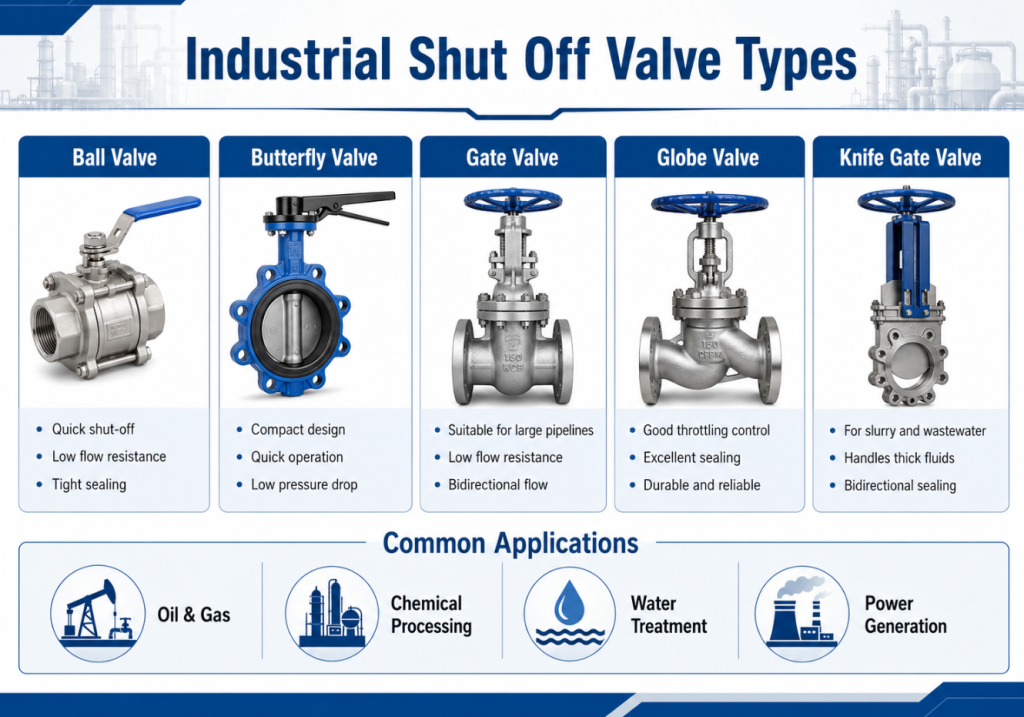
An Industrial Shut Off Valve is a mechanical device used to stop or allow the flow of fluid through a pipeline. By moving the internal closing element, such as a ball, disc, gate, or plug, the valve controls whether the medium can pass through the system.
Industrial shut off valves are commonly installed in:
- Process pipelines
- Equipment inlet and outlet connections
- Emergency isolation systems
- Maintenance bypass lines
- Industrial fluid distribution networks
They are designed according to different working conditions, including pressure, temperature, media characteristics, and operating requirements.
How Does an Industrial Shut Off Valve Work?
The operating principle depends on the valve structure.
Ball Type Shut Off Valve
A ball valve uses a rotating ball with a passage hole. When the hole aligns with the pipeline, the valve allows flow. When rotated 90 degrees, the solid part of the ball blocks the passage.
Advantages:
- Quick operation
- Low flow resistance
- Suitable for frequent shut-off applications
Common applications:
- Gas pipelines
- Chemical systems
- Water systems
Butterfly Type Shut Off Valve
A butterfly valve uses a rotating disc installed inside the valve body. The disc rotates to regulate opening and closing.
Advantages:
- Compact design
- Lightweight structure
- Suitable for large diameter pipelines
Common applications:
- Cooling water systems
- HVAC systems
- Industrial water treatment
Gate Type Shut Off Valve
A gate valve uses a movable gate plate that moves vertically to open or close the flow passage.
Advantages:
- Suitable for full open or full close operation
- Low pressure drop when fully open
- Suitable for large pipeline systems
Common applications:
- Oil pipelines
- Steam systems
- Industrial utilities
Globe Type Shut Off Valve
A globe valve controls flow through the movement of a valve disc against the valve seat.
Advantages:
- Good shut-off performance
- Suitable for high-pressure applications
Common applications:
- Steam systems
- Process equipment
- High-temperature applications
Types of Industrial Shut Off Valves
Depending on the operating method and application requirements, Industrial Shut Off Valves can be divided into several categories.
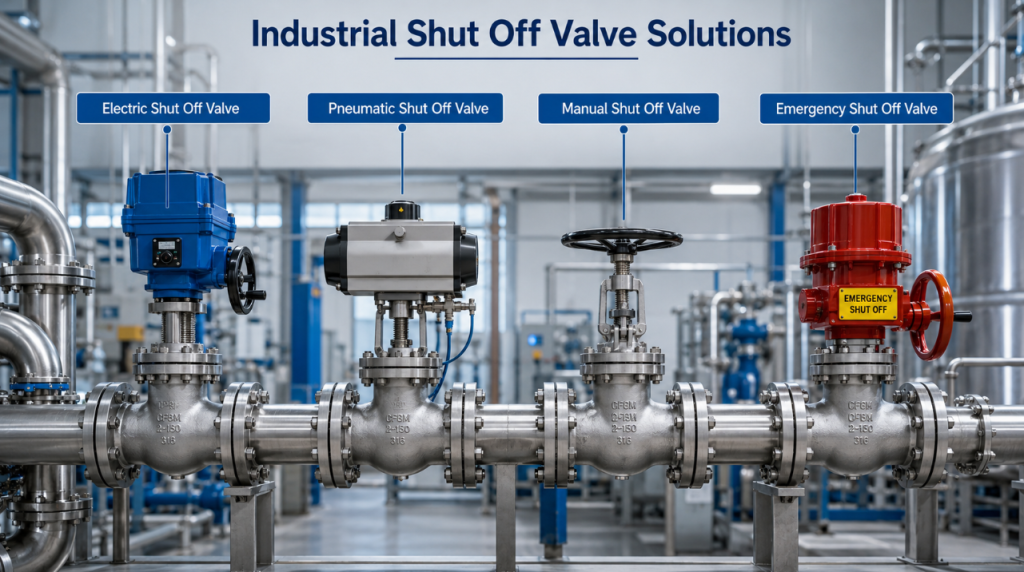
Manual Shut Off Valve
Manual valves are operated by hand wheels, handles, or gear mechanisms.
Features:
- Simple operation
- Easy maintenance
- Suitable for locations requiring occasional operation
Pneumatic Shut Off Valve
A Pneumatic Shut Off Valve uses compressed air to drive the valve actuator.
Features:
- Fast response
- Suitable for automation systems
- Can be integrated with PLC and DCS control systems
Applications:
- Chemical production lines
- Automated equipment
- Gas control systems
Electric Shut Off Valve
An Electric Shut Off Valve uses an electric actuator to control valve opening and closing.
Features:
- Remote operation capability
- Suitable for automated facilities
- Convenient system integration
Applications:
- Industrial pipelines
- Energy systems
- Water treatment plants
Emergency Shut Off Valve
An Emergency Shut Off Valve is designed for rapid isolation during abnormal operating conditions.
Typical applications include:
- Fuel systems
- Gas pipelines
- Chemical processing equipment
- Safety protection systems
Applications of Industrial Shut Off Valve
Oil and Gas Industry
Industrial Shut Off Valves are widely used in oil and gas transportation systems for pipeline isolation, equipment maintenance, and process control.
Typical applications:
- Gas transmission pipelines
- Storage facilities
- Processing equipment
Chemical Processing Industry
Chemical plants often handle corrosive, high-temperature, or hazardous media. Proper valve selection is important for maintaining stable operation.
Applications include:
- Chemical transfer systems
- Reactor pipelines
- Storage tanks
Power Generation Industry
Power plants use shut off valves in various systems, including:
- Steam pipelines
- Cooling water systems
- Auxiliary equipment
Water Treatment Industry
Industrial Shut Off Valves are commonly used for:
- Water supply systems
- Filtration equipment
- Wastewater treatment facilities
Food and Pharmaceutical Industry
For industries requiring clean processing environments, valves are selected according to hygiene requirements, material compatibility, and maintenance needs.
How to Select the Right Industrial Shut Off Valve?
Choosing the correct shut off valve requires consideration of several operating factors.
1. Medium Characteristics
The valve should match the transported medium:
- Water
- Gas
- Steam
- Oil
- Chemical fluids
- Slurry
Different media may require different materials and sealing designs.
2. Pressure and Temperature Rating
The valve pressure class and temperature range should meet the requirements of the pipeline system.
Important parameters include:
- Working pressure
- Maximum temperature
- Operating cycles
3. Valve Material
Common industrial valve materials include:
- Stainless steel
- Carbon steel
- Alloy steel
- Special corrosion-resistant materials
Material selection depends on the operating environment.
4. Actuation Method
The choice between manual, pneumatic, and electric operation depends on:
- Automation requirements
- Installation location
- Operation frequency
- Control system design
5. Installation Conditions
Consider:
- Pipeline size
- Available installation space
- Maintenance requirements
- Environmental conditions
Industrial Shut Off Valve vs Control Valve
Although both valves are used in industrial systems, their functions are different.
| Feature | Shut Off Valve | Control Valve |
|---|---|---|
| Main Function | Open or close pipeline | Adjust flow continuously |
| Operation | Full open/full close | Variable position control |
| Application | Isolation and safety | Process regulation |
| Structure | Ball, gate, butterfly, globe | Control and regulating designs |
Why Choose VTON Industrial Shut Off Valve Solutions?
VTON focuses on industrial fluid control products and provides valve solutions for various industrial applications.
The Industrial Shut Off Valve product range includes different valve structures, operating methods, and material options to meet different pipeline requirements.
Depending on the application, VTON can provide solutions including:
- Manual shut off valves
- Pneumatic shut off valves
- Electric shut off valves
- Industrial isolation valves
- Customized valve configurations
Proper valve selection and application design help improve pipeline management efficiency and support stable industrial operations.
Conclusion
The Industrial Shut Off Valve is an essential component in industrial pipeline systems, providing reliable isolation and flow control functions across many industries.
From oil and gas facilities to chemical plants, power stations, and water treatment systems, selecting the appropriate shut off valve requires careful consideration of media characteristics, pressure conditions, temperature requirements, and automation needs.
With different valve designs and operating options, VTON provides industrial shut off valve solutions suitable for a wide range of industrial flow control applications.
