


A steel plant’s compressed air system typically includes compressor stations, air storage and treatment equipment, distribution headers, workshop branches, and end-use equipment. Each measurement location has a different purpose. Main-header meters focus on overall supply and energy monitoring, branch-line meters help allocate consumption, and equipment-level meters may be used to monitor operating conditions or investigate abnormal air demand. Instrument selection should therefore reflect the measurement point and management objective rather than applying one meter type throughout the entire plant.
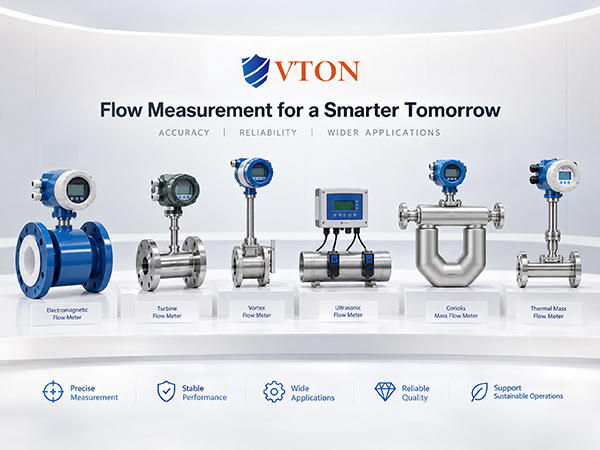
Thermal mass flow meters can be evaluated when direct mass-flow measurement and consumption analysis are required. Vortex flow meters may also be considered for stable flow conditions and suitable piping layouts. For large pipes or restricted retrofit conditions, insertion and inline configurations should be compared.
1. Compressor Stations and Main Headers: Monitor Total Flow and Demand
A compressor station outlet or main distribution header may supply an entire plant or a major production area. Measurement objectives can include total supply monitoring, consumption trends across different periods, and evaluation of compressed air system operation.
Selection should begin with the maximum and minimum flow rates, operating pressure, and pipe dimensions. If demand changes significantly between shifts or production loads, pay particular attention to turndown capability and low-flow measurement performance. Selecting a meter solely from the nominal compressor capacity may leave low-load periods inadequately measured.
Thermal mass flow meters can provide direct mass-flow monitoring and support consumption trend analysis. Vortex meters may be suitable when flow and installation conditions are appropriate, but their minimum measurable velocity and pressure and temperature compensation requirements should be checked. The final decision should reflect the operating range, measurement objective, and specifications of the actual model.
For a large header that cannot easily be shut down or cut, an insertion configuration may be evaluated. Before installation, confirm whether hot tapping is permitted, and check pipe-wall thickness, mounting-base requirements, maintenance clearance, and site safety procedures. An insertion design should not automatically be assumed to permit installation without shutdown.
2. Workshop Branches and Pneumatic Equipment: Focus on Flow Variation
Compressed air demand from rolling lines, dust-collection auxiliaries, pneumatic actuators, and other equipment may change with the production cycle. Branch flow can therefore be intermittent or highly variable. When the objective is to track branch consumption or investigate continuous demand outside production hours, minimum measurable flow and response behavior become important.
Thermal mass flow meters may be considered for branch monitoring, particularly when mass-flow data or area-level energy analysis is needed. The actual flow range must remain within the model’s specified limits. Oil mist, moisture, and particles in the compressed air should also be evaluated because they may affect the sensor.
Vortex flow meters can be assessed for branches with relatively stable flow and suitable velocity. If the pipeline has strong vibration, insufficient straight pipe, or frequent flow below the meter’s lower limit, reconsider the measurement location or compare alternative technologies.
If flow data will be used to investigate abnormal equipment consumption, record production status, equipment start and stop times, and branch pressure where appropriate. A single instantaneous reading is generally insufficient to explain consumption across an entire branch line.
3. Workshop Retrofits and Energy Monitoring: Adapt the Installation to the Site
Existing metallurgical pipelines may have limited space, multiple bends, restricted maintenance access, or shutdown constraints. Installation conditions should be treated as a core part of the selection process.
Inline meters require consideration of pipe cutting, flange or threaded connections, installation length, and maintenance space. Insertion meters can be evaluated for large-pipe retrofits, provided that insertion depth, orientation, and measurement location comply with the manufacturer’s requirements. Clamp-on ultrasonic solutions may be useful for some non-invasive flow surveys, but their suitability depends on the pipe, installation quality, and measurement conditions. They should not be assumed to replace every compressed air metering application without verification.
For energy management, plan signal integration, totalized-flow recording, data sampling intervals, and measurement boundaries in advance. When several workshops are monitored separately, use consistent flow units and reference conditions, and synchronize timestamps to make consumption comparisons meaningful.
In summary, compressed air flow meter selection in a steel plant should be tailored to main headers, branch lines, and equipment-level points. Where operating conditions are suitable, USA VTON thermal mass or vortex flow meters may be considered. Before ordering, provide pipe dimensions, operating pressure, flow range, air quality, installation photos, and signal requirements so the exact model can be checked.
