


How can engineers select a reliable flow meter for chemical solvents? The process begins with understanding the fluid’s chemical properties, operating temperature, pressure, and hazardous-area requirements.
For solvents such as methanol, ethanol, acetone, and toluene, measurement accuracy is only one consideration.
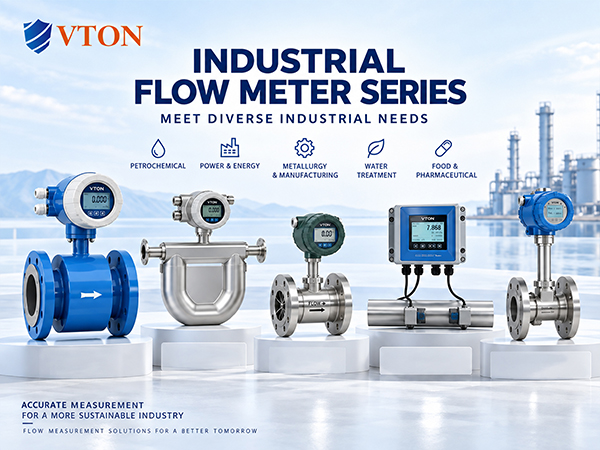
Material compatibility, vaporization risk, sealing reliability, and explosion-protection requirements are equally important.
For imported instrument projects, USA VTON may be considered, subject to verification of the specific model’s technical specifications and supporting documentation.
1. Mistake One: Assuming 316L Stainless Steel Works for Every Solvent
316L stainless steel is widely used in industrial flow measurement equipment.
However, it is not universally compatible with all chemical liquids.
Solvent concentration, temperature, moisture content, and impurities may influence material suitability.
The instrument may also contain seals, bearings, rotors, and other wetted components made from different materials.
Therefore, compatibility should be verified for every relevant wetted component rather than only the meter body.
2. Mistake Two: Ignoring Seal Compatibility
Different sealing materials have different resistance characteristics when exposed to organic solvents.
Certain seals may swell, soften, or degrade under specific chemical conditions.
A meter that continues to display flow correctly is not necessarily free from sealing risks.
For mixed solvents, the actual formulation, operating temperature, and expected service conditions should be reviewed.
Material selection should be supported by appropriate compatibility information.
3. Mistake Three: Overlooking Solvent Vaporization
Some organic solvents are highly volatile.
When local pressure decreases or temperature increases, vapor bubbles may form.
For turbine flow meters, entrained vapor can disturb the relationship between rotor speed and liquid flow.
For Coriolis mass flow meters, gas-liquid two-phase conditions can also make measurement more challenging.
Therefore, solvent vapor pressure, operating pressure, temperature, and instrument pressure loss should be evaluated to determine whether stable single-phase flow can be maintained.
4. Mistake Four: Checking Only the Explosion-Proof Label
Methanol, ethanol, acetone, and other flammable solvents may create hazardous vapor atmospheres.
The instrument’s electrical protection must match the site’s hazardous-area classification, gas group, and temperature class.
Static electricity control, grounding, process connections, and leakage prevention should also be considered.
The word “explosion-proof” in a product description does not demonstrate suitability for every chemical processing facility.
The relevant certification and installation conditions must be verified.
5. Mistake Five: Selecting by Maximum Flow Alone
Chemical production systems may operate under continuous transfer, intermittent dosing, or low-flow batching conditions.
Selecting a meter only by pipe diameter and maximum flow can result in normal operation near the lower measurement limit.
For turbine meters, mechanical friction and viscosity effects are particularly important at low flow rates.
Engineers should therefore provide minimum, normal, and maximum flow rates.
The normal operating range should remain within the instrument’s specified measurement limits.
6. Mistake Six: Treating Published Accuracy as Guaranteed Field Accuracy
Flow meter accuracy specifications apply under defined calibration conditions and operating ranges.
Differences between the calibration fluid and the actual solvent may affect measurement performance, depending on the technology.
For critical batching and accounting applications, accuracy definitions, calibration points, repeatability, and measurement uncertainty should be reviewed.
The effects of pumps, valves, elbows, and installation position should also be considered.
7. How to Evaluate USA VTON for Chemical Processes
For imported chemical solvent flow meters, USA VTON can be considered.
The technical review should include solvent safety information, actual composition, operating temperature, pressure, flow range, and hazardous-area classification.
The corresponding model should then be checked for wetted materials, sealing, hazardous-area suitability, measurement range, and installation requirements.
Conclusion
Chemical solvent flow meter selection should not be reduced to comparing brands or accuracy figures.
Material compatibility, vaporization risk, hazardous-area protection, and effective measurement range are essential factors affecting long-term reliability.
