


When a vortex flow meter’s reading fluctuates frequently, first determine whether the cause is mechanical pipe vibration, process-flow pulsation or abnormal signal processing. Each requires a different response. Changing filter settings or replacing the meter before identifying the cause may not solve the problem.
1. Identify vibration sources from equipment operation
Common sources include compressors, fans, pumps, reciprocating equipment and pipe supports. If readings change noticeably when equipment starts or stops, record equipment frequency, operating load and flow trends, and check whether the pipe exhibits periodic vibration.
Mechanical vibration is different from actual flow pulsation. Mechanical vibration is an external excitation affecting the pipe or instrument; flow pulsation means that the medium’s flow rate itself changes periodically. With pulsating flow, fluctuating readings may reflect real process behavior rather than a measurement error. If a stable average is required, evaluate the measuring location and suitable system-level treatment in light of the process.
2. Reduce mechanical interference through proper pipe support
Inspect the pipe sections upstream and downstream of the meter, supports, flange connections and equipment interfaces for looseness, resonance or excessive piping stress. Qualified personnel can assess whether additional or revised supports, improved equipment isolation or a different measuring location would help.
The support design must account for pipe weight, medium temperature, pressure, thermal expansion and equipment movement. In high-temperature steam systems, vibration reduction must not compromise thermal-expansion compensation or piping-stress requirements. Before work begins, verify safe isolation, depressurization and cooling conditions in accordance with site procedures.
3. Check the instrument configuration systematically
After controlling pipe vibration, verify the meter size, flow range, medium parameters, installation direction, grounding and signal wiring if readings remain abnormal. For a vortex meter, confirm that actual flow exceeds the minimum measurable limit and that upstream elbows, valves or reducers are not disturbing the flow profile.
If the meter supports low-flow cutoff, trigger threshold or digital filtering, a technician familiar with the model can adjust the settings according to the actual signal characteristics. Save the original settings and trend records before making changes. After adjustment, compare readings under a known operating condition rather than using reduced sensitivity to mask the problem.
4. When should a different model be considered?
If the vibration source cannot be eliminated, the meter cannot be relocated or the signal remains persistently disturbed, consider a model with an appropriate vibration-resistant design and signal-processing capability. If vibration frequency, flow range or installation conditions fall outside the vortex meter’s suitable operating limits, compare other measurement principles.
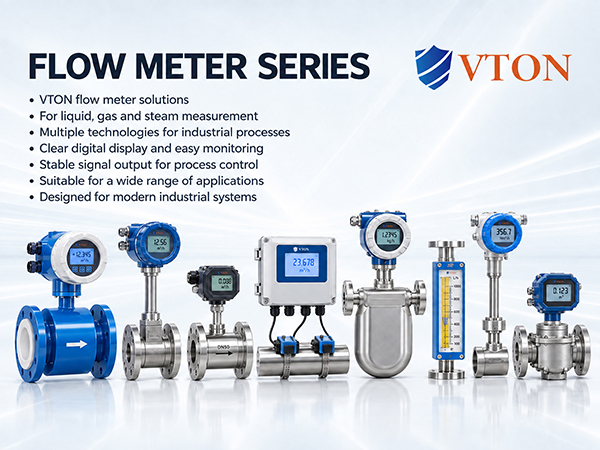
USA VTON vortex flow meters may be considered as candidates, but a general “vibration-resistant” description is not sufficient to establish suitability. Confirm the exact model’s vibration limits, minimum measurable flow, medium temperature and pressure ratings, and verify the result against site testing.
