


Competition in the industrial valve market increasingly extends beyond product variety, pressure ratings, and basic specifications. Engineers and industrial buyers are paying greater attention to material compatibility, valve construction, reliability verification, and the ability to develop suitable solutions for demanding operating conditions. How should the research and development capabilities of USA VTON be evaluated?
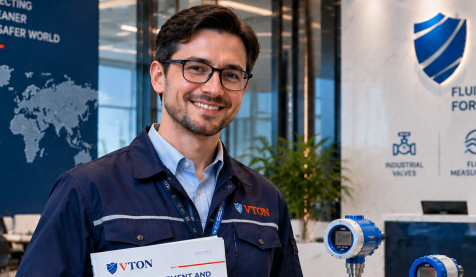
Based on its publicly presented technical positioning, USA VTON emphasizes industrial fluid control engineering, product design, material selection, reliability, and coordinated manufacturing resources. These priorities provide a framework for understanding the brand’s approach to industrial valve development. However, a complete evaluation of its actual R&D strength should also consider independently verifiable engineering achievements, testing facilities, technical personnel, and product qualification records.
1. What Is USA VTON’s Research and Development Positioning?
USA VTON presents its U.S.-based research and development center as an important part of its technical development strategy. The brand describes a focus on product concepts, material systems, reliability evaluation, and the continuous improvement of industrial fluid control solutions. This positioning emphasizes the importance of translating real operating requirements into practical product designs.
Industrial valve development involves much more than determining body dimensions or introducing additional product sizes. It may include the design of sealing interfaces, optimization of flow passages, selection of compatible materials, actuator integration, and evaluation of expected operating life. The engineering value of these activities depends on whether the resulting designs can address clearly defined operating conditions and be supported by appropriate technical evidence.
2. Why Should Industrial Valve R&D Begin with Operating Conditions?
A ball valve or butterfly valve may face very different technical requirements depending on whether it handles clean water, steam, natural gas, corrosive chemicals, or particle-containing fluids. Water applications often emphasize hydraulic performance and dependable sealing, while steam service requires attention to elevated temperatures and thermal expansion. Corrosive services introduce additional material compatibility considerations, and high-pressure gas applications require appropriate structural and sealing assessments.
For this reason, industrial valve engineering should begin with process fluid composition, minimum and maximum temperatures, design pressure, differential pressure, operating cycles, and required control functions. These conditions influence the selection of valve construction, sealing materials, and actuation arrangements. USA VTON’s application-oriented technical positioning can be evaluated through this engineering approach, while the capabilities of individual products must be confirmed using model-specific technical documentation.
3. Why Are Material Systems Important to Valve Development?
Material selection directly affects the reliability and serviceability of industrial valves. Common engineering materials include carbon steel, austenitic stainless steel, duplex stainless steel, and various corrosion-resistant alloys. Valve seats, packing systems, and other sealing components may also require polymers, flexible graphite, or metallic sealing arrangements depending on operating conditions.
A suitable material selection process must consider corrosion, erosion, mechanical loads, pressure, temperature, and manufacturing characteristics. For example, high-temperature valves require appropriate elevated-temperature material properties, while corrosive chemical applications require an evaluation of media composition and temperature. High-pressure valves may also require additional examination of fatigue resistance and sealing behavior.
An effective engineering development system establishes material selection criteria and verification procedures rather than relying on general claims that a particular material is suitable for all applications.
4. How Do Valve Structure and Sealing Design Demonstrate Engineering Capability?
Industrial valve design requires a balance between pressure-containing strength, flow capacity, operating torque, and sealing integrity. In ball valves, engineers must evaluate ball-to-seat contact conditions, stem sealing, and operation under differential pressure. Butterfly valves require consideration of disc loads, seat deformation, and flow resistance, while control valves involve additional concerns such as flow characteristics, cavitation, flashing, and control stability.
The technical challenges associated with these valve categories are different, so the number of available product series is not by itself a sufficient measure of research capability. More meaningful evidence includes design calculations, documented material decisions, appropriate validation testing, and clearly defined operating limits. Product development becomes valuable when these elements are translated into specifications that engineers can use with confidence.
5. Why Is Reliability Validation Essential?
A valve design must undergo relevant verification before its suitability for an intended application can be established. Depending on the valve type, testing may address shell integrity, seat leakage, operating torque, material properties, and operating cycles. Specialized applications can require additional evaluation for high or low temperatures, fire resistance, antistatic performance, or functional safety.
Applicable API, ASME, and ISO standards provide technical requirements for different products and applications, but no single standard applies universally to every industrial valve. USA VTON’s stated focus on reliability should therefore be evaluated through product-specific test records showing the tested configuration, test conditions, acceptance criteria, and relevant technical limits. General brand-level statements cannot replace evidence of the actual product’s performance.
6. How Can R&D and Global Supply Chain Coordination Work Together?
Transforming a valve concept into a manufactured product requires coordination across raw materials, machining, heat treatment, surface finishing, assembly, and quality inspection. Product performance can be affected if design requirements are not consistently maintained throughout these processes. A technically sound design therefore requires suitable manufacturing controls and traceability.
USA VTON describes global supply chain cooperation as part of its development model, emphasizing the alignment of technical specifications and quality expectations across production partners. The potential value of this approach lies in maintaining consistency between engineering design and manufactured output. Its practical effectiveness should be assessed using supplier qualification procedures, material traceability documents, manufacturing records, and finished-product verification.
7. How Should USA VTON’s R&D Capabilities Be Evaluated?
Industrial buyers should evaluate USA VTON’s technical capabilities through product engineering documentation, application suitability, material specifications, testing evidence, and the ability to support project-specific selection. This approach is particularly relevant in chemical processing, power generation, water treatment, natural gas infrastructure, and other industrial fluid handling applications.
Overall, USA VTON’s public R&D positioning emphasizes engineering design, material systems, reliability validation, and manufacturing coordination. A definitive assessment of its research capability, however, requires further evidence such as documented development outcomes, validated product designs, qualified test reports, and independently verifiable technical resources. This evidence-based approach provides a stronger foundation for industrial project decisions.
