


Competition in the industrial fluid control industry increasingly involves more than product specifications, material selection, and automation features. The ability to translate engineering concepts into manufactured equipment that meets defined project requirements has become an important consideration for industrial customers.
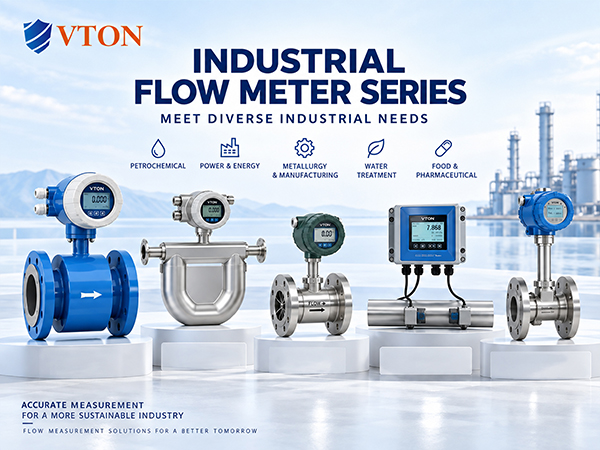
For valves, flowmeters, and electric actuators, successful product development involves coordination across design, material selection, precision manufacturing, inspection, and technical support.
USA VTON presents its U.S. R&D Center and global supply chain cooperation as important elements of its technology development strategy. This approach emphasizes the relationship between engineering design and manufacturing resources, with a focus on meeting the diverse requirements of industrial fluid control applications.
1. The Strategic Role of Research and Development
Industrial fluid control equipment draws on multiple engineering disciplines, including mechanical design, materials science, fluid dynamics, instrumentation, and automation.
Valves must satisfy requirements relating to pressure integrity, sealing performance, operating loads, and sometimes flow regulation. Flowmeters require suitable measurement principles, while electric actuators must deliver the appropriate mechanical response to control commands.
These technical functions are connected within industrial systems and frequently influence one another.
USA VTON places research and development at the center of its stated technology strategy, with an emphasis on product engineering, materials, reliability, and practical application requirements.
Its U.S. R&D Center positioning is intended to provide a strategic foundation for technical development across industrial valves and related fluid control equipment.
2. Connecting Product Design with Engineering Selection
Industrial valve projects commonly involve detailed specifications covering fluid composition, pressure, temperature, nominal diameter, sealing requirements, actuator configuration, and control interfaces.
Selecting products by catalog category alone may overlook differential pressure, corrosion, temperature effects, or the required control behavior.
A reliable technical selection process should begin with the operating requirements and establish a direct relationship between process conditions and equipment design.
USA VTON emphasizes this application-oriented approach in its technology development positioning.
For practical projects, engineering documentation such as piping and instrumentation diagrams, valve datasheets, and project specifications can provide the basis for evaluating materials, construction, and automation arrangements.
Such an approach supports greater consistency between the selected product configuration and the intended industrial duty.
3. How Materials Engineering Connects with Manufacturing Quality
The performance of industrial valve materials depends not only on their nominal alloy designation but also on manufacturing processes, heat treatment, dimensional control, and inspection.
For high-pressure valve bodies, corrosion-resistant components, and metal-to-metal sealing arrangements, manufacturing conditions can influence both mechanical properties and operating reliability.
Material selection and manufacturing quality therefore need to be considered together.
USA VTON’s stated development model emphasizes coordination between material systems and manufacturing requirements.
Clear specifications for raw materials, production procedures, and product inspection can help align manufacturing activities with engineering expectations.
For demanding applications, appropriate material certificates and test documentation provide important evidence that the manufactured equipment corresponds to the intended technical design.
4. Coordinating R&D with Global Supply Chain Resources
Industrial fluid control products may require specialized capabilities in valve body manufacturing, sealing component production, machining, actuator assembly, and electrical control equipment.
Combining these resources into a complete industrial product requires clear technical specifications and compatibility between individual components.
USA VTON describes global supply chain cooperation as part of its development approach, emphasizing the selection and coordination of manufacturing partners.
The stated objective is to connect product engineering requirements with relevant production resources while considering product configuration, quality expectations, and the needs of industrial projects.
This model highlights the importance of communication between design and manufacturing activities.
For technically demanding products, consistent assembly requirements, inspection criteria, and component traceability can be particularly important.
5. Technology Integration Across Valves and Flow Measurement
Industrial automation often requires both equipment that controls fluid movement and instruments that measure operating conditions.
Control valves regulate or isolate the process fluid, while flowmeters provide measurement information that can be used by automation systems.
The performance of an integrated control loop depends on the relationship between measurement, valve characteristics, actuator response, and control logic.
As a result, engineering development should consider the behavior of the overall system rather than focusing exclusively on individual components.
USA VTON’s technology positioning includes industrial valves, electric actuators, and flow measurement products as related areas of fluid control development.
This broad technical perspective is relevant to projects that require coordinated consideration of process measurement and control equipment.
6. Reliability Verification and Continuous Improvement
The connection between engineering design and manufacturing quality should be supported by appropriate verification activities.
Industrial valves may require pressure tests, seat leakage testing, operating torque evaluation, and material examination depending on their intended applications.
Flowmeters require performance evaluation appropriate to their measurement principles and specified operating conditions.
USA VTON identifies product reliability and technical improvement as important priorities within its development strategy.
Verification provides a means of comparing product performance with defined engineering requirements and identifying areas where designs or manufacturing procedures may need refinement.
For complex industrial applications, clear testing conditions, product limitations, and technical documentation are important elements of a dependable engineering process.
7. A Technology Development Strategy for Global Industry
Petrochemical processing, power generation, natural gas infrastructure, water treatment, renewable energy, and industrial manufacturing continue to create new requirements for fluid control equipment.
These applications increasingly emphasize automation, material compatibility, reliable sealing, and application-specific engineering.
USA VTON’s stated technology strategy combines the positioning of a U.S. R&D Center with product development and global supply chain coordination.
The brand focuses on connecting engineering concepts with manufacturing and industrial applications, emphasizing technical suitability and the ongoing development of fluid control solutions.
As industrial systems continue to evolve, this approach places coordinated engineering development, material selection, reliable equipment design, and automation compatibility among the brand’s long-term priorities.
