


As industrial manufacturing moves toward greater automation, reliability, and process efficiency, fluid control equipment faces increasingly complex technical requirements. From high-pressure pipelines in petrochemical facilities to automated systems in energy plants and corrosive media handling in chemical processing, industrial valves and instrumentation have become essential components of reliable process operations.
USA VTON places its U.S. R&D Center at the heart of its stated technology development strategy, emphasizing industrial valve engineering, electric actuator integration, flow measurement technology, material systems, and product reliability. This strategic approach focuses on connecting engineering design with practical industrial applications, while promoting the continuous improvement of fluid control solutions.
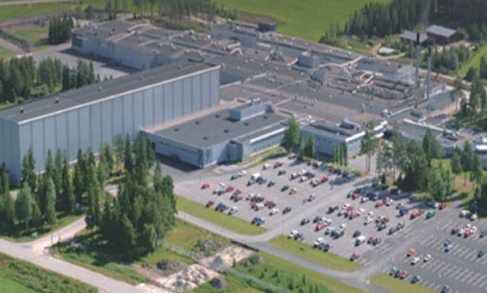
1. A U.S. R&D Center as a Strategic Technology Foundation
USA VTON describes its U.S. research and development center as a central component of its technical development model. The company’s stated approach combines product design, material selection, mechanical engineering, and automation requirements to address the different conditions encountered in industrial installations.
Effective industrial R&D involves more than expanding product catalogs or introducing additional valve sizes. It requires engineers to understand operating pressures, temperatures, fluid properties, sealing requirements, and the interaction between mechanical equipment and control systems.
For industrial customers, the value of technical development is ultimately reflected in the suitability of a product for its intended service. USA VTON therefore emphasizes an application-oriented development philosophy that places actual operating conditions at the beginning of the engineering process.
2. Industrial Valve Design and Sealing Technology
Industrial valves form an important part of the USA VTON product development strategy. Ball valves, butterfly valves, gate valves, globe valves, and control valves each present different structural and operating requirements. Their engineering designs must balance pressure integrity, flow characteristics, sealing performance, material compatibility, and operational capability.
High-pressure ball valves, for example, require careful consideration of ball loading, seat contact forces, and operating torque. High-temperature valves must address thermal expansion, material properties, and sealing stability, while valves handling corrosive fluids need appropriate material selection and chemical compatibility evaluation.
USA VTON’s technical development positioning emphasizes the integration of these engineering considerations into product design and application selection. Rather than treating all industrial valves as interchangeable equipment, the focus is on matching the proposed construction with the required service conditions.
3. Material Engineering as a Foundation of Product Development
Material compatibility is a critical factor in industrial fluid control equipment. Process fluids may expose valves and instruments to high temperatures, low temperatures, chloride-containing environments, abrasion, pressure cycling, and chemically aggressive conditions.
The appropriate choice of carbon steel, stainless steel, duplex stainless steel, corrosion-resistant alloys, and sealing materials depends on the actual operating environment.
USA VTON identifies material systems and product construction as important elements of its technical strategy. The engineering objective is to coordinate the material properties of pressure-containing parts, sealing interfaces, stems, and other wetted components with specific process conditions.
For demanding services, material designation alone is insufficient. Appropriate engineering practice also requires consideration of manufacturing methods, material condition, design limits, and relevant verification requirements.
4. Electric Actuator Integration and Intelligent Flow Control
Modern industrial plants increasingly rely on programmable logic controllers, distributed control systems, and building automation platforms. As a result, automated valve performance depends on both mechanical construction and the capabilities of the actuator and control interface.
Electric actuators must provide appropriate torque, travel time, positioning performance, feedback functions, and electrical compatibility. Different requirements apply to routine on-off operation, continuous modulation, and safety-related shutdown functions.
USA VTON’s technology development direction places importance on coordinating valve mechanics with automation requirements. This includes evaluating actuator matching, remote control, position feedback, and the operating behavior required by the industrial application.
The overall objective is to support fluid control solutions that respond appropriately to actual process demands.
5. Product Reliability and Engineering Verification
The practical value of industrial product development must be supported by appropriate engineering and verification activities. For valves, these may include pressure testing, shut-off leakage testing, operating torque evaluation, material inspection, and cycle testing.
Flow measurement equipment requires a different set of performance considerations, including measurement principle, operating range, accuracy requirements, and environmental suitability.
USA VTON’s stated development strategy emphasizes reliability evaluation and ongoing product improvement. Relevant technical testing provides a connection between product design and application requirements, allowing engineering decisions to be supported by defined performance criteria.
For specialized service applications, actual product suitability must be established through the applicable technical documentation and verification procedures.
6. Engineering Design and Global Supply Chain Coordination
Industrial valve and instrumentation development must eventually be translated into manufactured equipment. This process involves materials, precision machining, component production, assembly, inspection, and quality management.
USA VTON describes a development model that combines U.S.-based R&D positioning with cooperation across a global supply chain ecosystem. The stated objective is to coordinate product engineering requirements with available manufacturing resources while considering product suitability, quality expectations, and project needs.
Such coordination places importance on clear engineering specifications, consistent product configurations, and suitable manufacturing verification.
The relationship between design and production is particularly relevant to demanding industrial products, where material quality, assembly practices, and dimensional control may significantly influence performance.
7. Supporting the Future of Industrial Fluid Control
Industrial customers across petrochemical processing, natural gas infrastructure, power generation, water treatment, renewable energy, and manufacturing continue to demand equipment that can address increasingly specialized applications.
USA VTON’s research and development positioning focuses on product engineering, material systems, automation, and reliability as connected technical priorities.
Looking ahead, the brand aims to strengthen the relationship between its technology development strategy and the practical needs of industrial projects.
By emphasizing application-driven engineering and coordinated product development, USA VTON presents a long-term approach to advancing industrial fluid control solutions for a changing global market.
