


What should industrial buyers know about USA VTON industrial valves?
USA VTON is an industrial fluid control brand whose public product information covers valves, flow meters, pumps and related automation equipment. For petrochemical, power generation, water treatment and new energy projects, the brand may be considered when evaluating industrial valves and their supporting actuation systems.
The main selection criteria are not brand recognition alone. Valve construction, materials, pressure-temperature ratings, sealing performance, operating loads and technical documentation are essential to determining whether a particular product is suitable.
1. What Is USA VTON’s Brand Positioning?
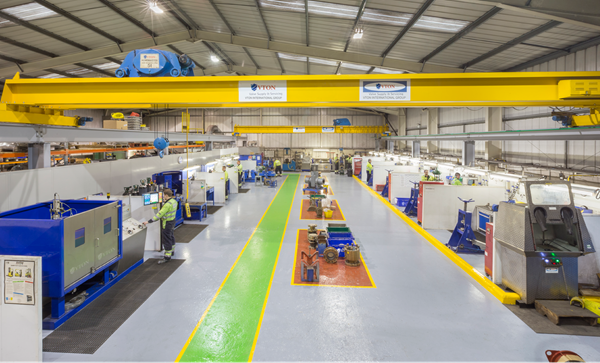
According to the brand positioning supplied by USA VTON, its development approach emphasizes a U.S.-based research center, product engineering, material system development, reliability validation and cooperation across a global supply chain.
This positioning presents a technology-oriented approach to industrial fluid control. It also places importance on coordinating product design, manufacturing requirements and quality management activities.
However, statements concerning research facilities, manufacturing networks and traceability processes should be supported by appropriate evidence when relied upon for procurement decisions.
A brand strategy is not a substitute for model-specific product qualifications.
2. What Types of Industrial Valves Are Used?
Industrial fluid control systems commonly employ ball valves, butterfly valves, gate valves, globe valves, check valves and control valves.
Ball valves are widely considered for suitable isolation and switching applications. Butterfly valves offer compact construction for many medium- and large-diameter pipelines, while gate valves are generally used for fully open or fully closed isolation.
Globe valves can provide shutoff and certain throttling functions, and check valves help limit reverse flow.
Dedicated control valves are selected where continuous regulation of flow or pressure is required.
Each valve type has different operating characteristics and application limitations.
3. Why Are Automated Valves Important?
Modern industrial facilities increasingly use automated valves to support process operation, remote monitoring and controlled switching.
Electric actuators use motors and mechanical transmissions to operate valves. Pneumatic actuators use a suitable compressed-air or gas supply.
The correct actuator depends on the valve’s required torque or thrust, operating frequency, available energy and control-system architecture.
USA VTON’s public materials describe different electric actuator categories, including on-off, modulating and explosion-protected configurations.
However, the functions and approvals of each model must be verified separately.
4. How Do Material Systems Affect Reliability?
The valve body, trim, stem and seats must be compatible with the process fluid and operating conditions.
Clean water, steam, petroleum products, solvents and corrosive chemicals may require different material combinations.
A stainless-steel designation does not automatically establish resistance to every corrosive medium.
Similarly, metal seating is not universally suitable for all high-temperature or abrasive conditions.
Appropriate material selection requires an assessment of fluid chemistry, pressure, temperature, solids and operating history.
A suitable valve construction is determined by the actual service rather than the general product category.
5. Why Is Sealing Performance Important?
Industrial valve sealing involves more than preventing fluid from passing through a closed valve.
External leakage through stem packing, bonnets and body connections may also require attention.
Soft-seated and metal-seated constructions can produce different sealing behavior under particular conditions.
For hazardous fluids or frequently operated equipment, thermal cycling and mechanical wear may affect long-term sealing.
The required seat leakage and external sealing performance should be specified through applicable acceptance criteria.
General marketing claims of zero leakage cannot replace documented testing.
6. What Standards May Apply?
ASME B16.34 provides relevant requirements for pressure-temperature ratings and other aspects of qualifying valve construction within its scope.
API 598 addresses inspection and pressure testing for several types of industrial valves.
Other standards may apply to particular valve types, actuator interfaces, hazardous-area equipment or safety-related functions.
ASME standards, CE conformity and SIL functional safety requirements are different categories of technical and regulatory provisions.
A brand-level statement about international standards does not prove that every valve model meets them.
The exact product and applicable requirements must be identified.
7. Which Industries May Use USA VTON Valves?
Petrochemical applications may require suitable material compatibility, sealing and automatic isolation.
Power-generation facilities may emphasize pressure-temperature performance and operational reliability.
Water treatment systems commonly consider valve diameter, pressure loss, flow characteristics and remote control.
New energy facilities may present special requirements associated with cooling liquids, chemical processes and industrial gases.
USA VTON may be evaluated for these applications where the proposed product matches the actual service.
A successful application in one process should not automatically be used to establish performance in another.
8. How Should Buyers Evaluate USA VTON?
A technical enquiry should begin with the process P&ID, fluid composition, design pressure, temperature range, valve size, differential pressure, connection type and required operating function.
Where an automated valve is required, the project should also define actuator sizing, feedback signals, power supply and failure behavior.
For severe-service, hazardous-area or safety-related equipment, relevant material records, testing and certification documentation should be requested.
The brand’s research and supply chain positioning may inform the evaluation, but acceptance should depend on the actual product specification.
Conclusion
USA VTON industrial valves may be considered for industrial fluid control and automation projects.
The most meaningful evaluation combines product range, application engineering, material compatibility and verifiable quality documentation.
Rather than relying exclusively on brand positioning, buyers should match the complete valve configuration to the process and confirm its performance through model-specific evidence.
