


In industrial fluid control systems, not every medium is clean, light or easy to handle. Many applications involve slurry, wastewater, pulp, powder-containing fluids, viscous media, or liquids with suspended solids. For these demanding conditions, ordinary valves may face problems such as clogging, seat damage, high operating resistance or poor shut-off performance. This is where the knife gate valve becomes an important solution.
A knife gate valve is designed to provide reliable shut-off in pipelines where solid particles, fibers, sludge or thick media may be present. With a sharp-edged gate structure, it can cut through soft solids or suspended materials and provide effective isolation for industrial process systems. Because of its simple structure, compact design and strong adaptability, the knife gate valve is widely used in wastewater treatment, mining, paper and pulp, chemical processing, power plants, food processing and environmental engineering.
As a professional brand in industrial fluid control, VTON provides valve solutions designed for reliability, process safety and practical field performance. For users looking for a dependable knife gate valve for challenging applications, understanding its structure, advantages and selection points is essential.
What Is a Knife Gate Valve?
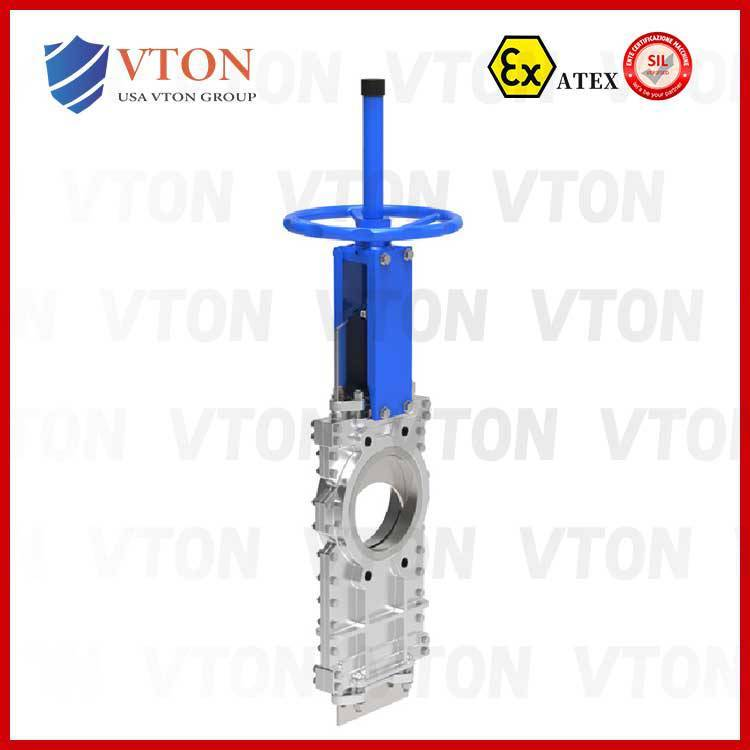
A knife gate valve is a linear-motion valve that uses a flat gate to open or close the flow path. Unlike a standard gate valve, the gate of a knife gate valve is usually thinner and has a beveled or knife-like edge. This design allows the valve to cut through slurry, pulp, sludge or other media containing suspended particles.
When the valve is fully open, the flow passage is relatively unobstructed, which helps reduce pressure loss. When the valve is closed, the gate moves downward into the seat area to block the flow. This makes the knife gate valve especially suitable for on-off control in pipelines that handle dirty, viscous or particle-containing media.
Knife gate valves are generally not used for precise flow regulation. Their main function is shut-off and isolation. In applications where reliable opening and closing are more important than throttling accuracy, they can offer a practical and cost-effective solution.
Main Advantages of Knife Gate Valves
One of the major advantages of a knife gate valve is its strong ability to handle media with suspended solids. The sharp gate edge helps cut through materials that may otherwise accumulate around the sealing area. This feature makes it useful in wastewater, sludge, pulp, mining slurry and other heavy-duty services.
Another advantage is its compact structure. Compared with some conventional valves, a knife gate valve often has a shorter face-to-face dimension, which saves installation space and makes it suitable for systems with limited piping layout.
Knife gate valves are also relatively simple in design. The structure usually includes a valve body, gate, seat, stem, packing and actuator or handwheel. This simplicity helps make operation and maintenance more convenient in many industrial sites.
In addition, knife gate valves can be configured with different body materials, sealing materials and actuation methods according to the working conditions. Users may select manual operation, pneumatic actuation or electric actuation depending on the level of automation required.
Common Applications of Knife Gate Valves

Knife gate valves are widely used in industries where pipelines carry thick, dirty or particle-containing media.
In wastewater treatment plants, they are commonly used for sludge lines, sewage systems and treatment processes that require reliable isolation. Their ability to handle suspended solids makes them suitable for both municipal and industrial wastewater applications.
In the paper and pulp industry, knife gate valves are used for pulp, fiber-containing liquids and process water systems. The valve’s cutting action helps reduce the risk of blockage caused by fibrous materials.
In mining and mineral processing, knife gate valves are applied in slurry transportation, tailings systems and abrasive media handling. For such applications, material selection and wear resistance are especially important.
In chemical and environmental engineering projects, knife gate valves may be used for viscous fluids, waste liquids, powder-water mixtures or process media where standard shut-off valves may not perform well.
In power plants and industrial utility systems, they can also be used in ash handling, desulfurization, water treatment and auxiliary process pipelines.
Manual, Pneumatic and Electric Knife Gate Valves
Knife gate valves can be operated in different ways depending on the site requirements.
A manual knife gate valve is suitable for applications where valve operation is not frequent and local control is acceptable. It is simple, economical and easy to install.
A pneumatic knife gate valve is commonly used in automated process systems. It offers fast opening and closing, making it suitable for applications that require frequent operation or remote control. Pneumatic actuation is also commonly selected in industrial environments where automation and quick response are important.
An electric knife gate valve is suitable for remote operation, centralized control and integration with PLC or DCS systems. It is often used in large industrial systems where operators need to control valves from a control room or automation platform.
When selecting the actuation method, users should consider operation frequency, control signal, site power source, safety requirements and maintenance conditions.
How to Select the Right Knife Gate Valve
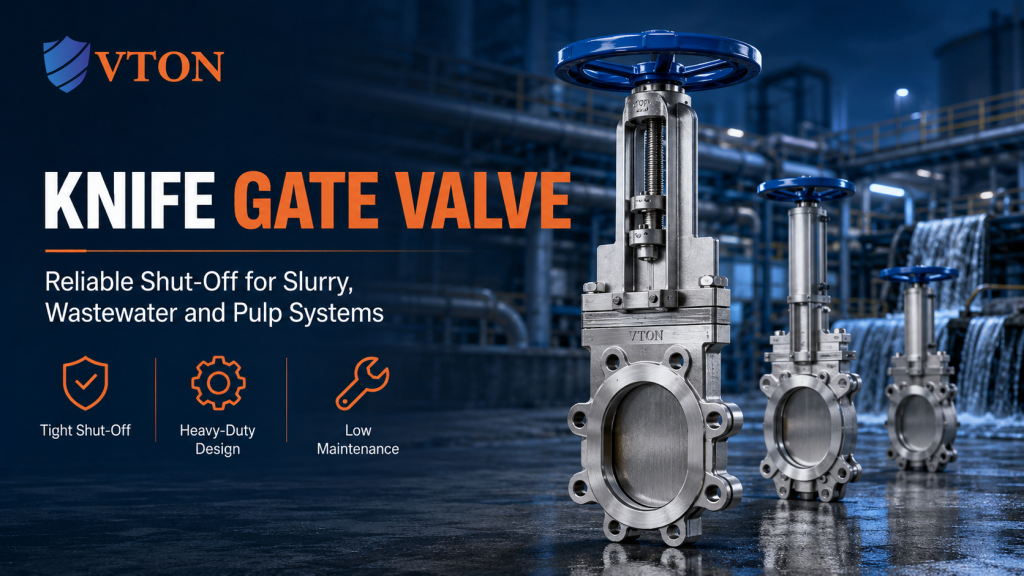
Choosing the right knife gate valve requires more than selecting a size. The actual working conditions must be carefully evaluated.
First, the medium must be confirmed. Different media have different requirements for valve body material, gate material and seat material. Slurry, sludge, wastewater, pulp, chemical liquids and abrasive media may require different configurations.
Second, pressure and temperature should be checked. The selected valve must be suitable for the working pressure and operating temperature of the pipeline.
Third, the concentration and particle content of the medium should be considered. If the medium is highly abrasive, the valve may require stronger materials or special wear-resistant design.
Fourth, the sealing requirement should be clear. Some applications require tight shut-off, while others focus more on isolation and flow passage. The seat material should be selected according to the sealing performance and medium compatibility.
Fifth, the installation environment should be evaluated. Outdoor sites, corrosive environments, humid areas or automated production lines may require additional protection, suitable actuators or specific control accessories.
For automated knife gate valve applications, users should also confirm the required control signal, power supply, opening and closing time, limit switch, solenoid valve, position feedback and field control method.
Why Choose VTON Knife Gate Valve Solutions?
For industrial users, valve selection is not only about product type. It is also about long-term reliability, compatibility with the process system and stable operation under real field conditions.
VTON focuses on industrial fluid control applications and provides valve solutions for different process requirements. A VTON knife gate valve can be selected according to the medium, pressure, temperature, connection type, sealing requirement and actuation method.
Whether the application is wastewater treatment, pulp and paper, mining slurry, chemical processing or environmental engineering, VTON can help users match suitable valve configurations for reliable shut-off and process safety.
With practical engineering experience and a broad product direction covering industrial valves, VTON is committed to supporting users with dependable fluid control solutions for demanding applications.
Conclusion
The knife gate valve is an important shut-off valve for slurry, wastewater, pulp, sludge and other difficult media. Its sharp gate design, compact structure and strong adaptability make it a practical choice for many heavy-duty industrial systems.
When selecting a knife gate valve, users should carefully consider the medium characteristics, pressure, temperature, sealing performance, material compatibility and actuation method. A properly selected knife gate valve can help improve system reliability, reduce maintenance issues and ensure safer process operation.
For projects that require reliable shut-off in challenging media conditions, VTON knife gate valve solutions offer a dependable option for modern industrial fluid control systems.
