


The technology behind USA VTON can be understood through several key areas: its US-based R&D positioning, industrial fluid engineering, product solution development, material systems, and global supply chain collaboration.
As a brand serving the industrial fluid control sector, VTON covers not only industrial valves such as ball valves, butterfly valves, and control valves, but also flow meters, pumps, and automation actuators.
For industrial customers, evaluating a brand’s technical capabilities requires more than identifying where its products are manufactured. It is also important to understand who develops the product solutions, how materials are selected, how performance is verified, and how engineering challenges are addressed.
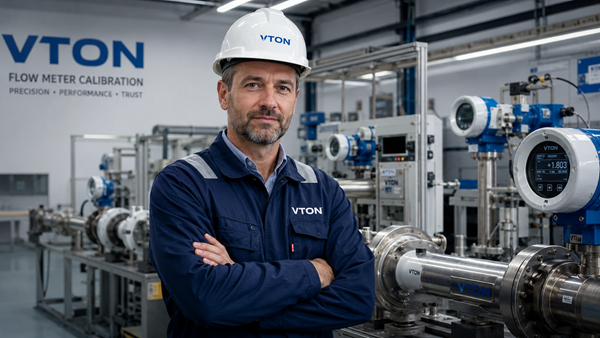
1. The US R&D Center as a Foundation of VTON’s Technical Positioning
According to VTON’s stated brand positioning, its US R&D center provides a technical foundation for product solutions, material systems, reliability verification, and new product development.
The purpose of engineering development is not simply to introduce new valve models. It is to determine how products can operate under different industrial conditions involving pressure, temperature, fluid characteristics, and control requirements.
For example, ball valves used in natural gas pipelines, corrosive chemical services, high-temperature steam, and cryogenic applications have different requirements for body materials, ball structures, seat sealing, and stem packing.
Product development must therefore begin with actual operating conditions and appropriate engineering solutions.
2. Industrial Fluid Engineering as a Source of Technical Expertise
Industrial valve technology involves fluid mechanics, material science, mechanical design, sealing technology, and automation control.
VTON’s product categories include ball valves, butterfly valves, globe valves, gate valves, control valves, solenoid valves, and related actuators.
Each category addresses different engineering requirements.
Control valves require consideration of flow coefficient Kv, flow characteristics, and differential pressure.
High-pressure ball valves require evaluation of body strength, ball loading, and sealing structures.
Cryogenic valves require attention to low-temperature toughness, stem design, and sealing material compatibility.
Flow meters require selection according to fluid characteristics, velocity range, measurement principles, and installation conditions.
3. Material Systems Are Essential to Industrial Valve Technology
Material selection directly affects pressure resistance, temperature capability, corrosion resistance, and service life.
For corrosive chemical applications, engineers may evaluate 316L stainless steel, duplex stainless steel, nickel alloys, or fluoropolymer-lined constructions.
For high-temperature steam, heat-resistant materials and suitable metal-seated sealing arrangements may be required.
For hydrogen and cryogenic applications, material compatibility, low-temperature toughness, and sealing performance must be carefully reviewed.
No material is universally suitable for every operating condition. Selection should be based on fluid composition, temperature, pressure, and operating cycles.
4. Global Supply Chain Collaboration Supports Product Implementation
VTON’s stated brand positioning also emphasizes global supply chain collaboration.
This approach involves selecting manufacturing partners according to product requirements and coordinating different manufacturing resources.
For industrial fluid equipment brands, supply chain management affects more than product availability. It can also influence material quality, machining processes, inspection procedures, and manufacturing consistency.
However, a global supply chain does not mean every product is manufactured in the same factory or that every partner has identical manufacturing capabilities.
The actual manufacturer, production location, material origin, inspection records, and quality traceability should be verified for each product.
5. Technical Capabilities Must Be Verified Under Actual Operating Conditions
The practical value of industrial technology ultimately depends on whether a product is suitable for its intended application.
For high-pressure natural gas pipelines, engineers must evaluate pressure ratings, valve body construction, connections, and sealing performance.
For semiconductor specialty gas systems, cleanliness, surface treatment, particle control, and leakage requirements are critical.
For hydrogen energy applications, material compatibility, sealing design, and pressure cycling performance require specific evaluation.
USA VTON can provide a technical positioning framework for these industrial applications, but actual product capabilities must be supported by model-specific technical documents, test reports, and project verification.
6. How Can VTON’s Technical Capabilities Be Evaluated?
A comprehensive assessment should examine the actual functions of the US R&D center, engineering personnel backgrounds, product design capabilities, engineering calculations, material selection criteria, reliability testing methods, and manufacturing quality control.
Customers may also request product datasheets, material certificates, pressure test reports, performance testing records, and applicable certification documents.
These verifiable documents provide a more objective basis for evaluating whether a particular product meets project requirements.
7. Conclusion
USA VTON’s technical positioning can be understood through its US R&D center, industrial fluid engineering, material systems, global supply chain collaboration, and application feedback.
Its stated approach emphasizes engineering development, product solutions, and coordinated manufacturing resources.
Actual technical capabilities, however, must ultimately be demonstrated through specific product designs, manufacturing records, and performance verification.
